


Abstract
Triggered by a call for observers in the BAV forum, I initiated CCD monitoring of the eclipsing variable BM Ori at the end of 2024. After optimizing the observing conditions in September 2025, the variable was monitored until beginning of November 2025 for 22 nights and (≈ 90 hours) in both the CV band and RGB. The observations were compared with simultaneous visual estimates [5][13]. The visual estimates are considerably lower (up to 3 magnitudes) than the measured values. This paper discusses the reasons for this discrepancy. During the monitoring no unusual dimming of light was found outside the known minima.
The weak image of the BM Ori on the historical photograph of the Trapezium by Henry Draper from 1880 [15][16] is explained and cannot be considered evidence of unusual light attenuation of the BM Ori.
- Details
- Category: Articles
Abstract
BM Ori is an eclipsing binary star in which a remarkable change in the shape of the light curve - especially the main minimum - was observed over the course of only a few years between 1968 and 2011. This paper focuses particularly on the primary minimum of November 10/11, 2025. A constant phase in the primary minimum was no longer observed: corresponding to “d” ≤ 0.01 [d]. Together with minima previously observed (December 2024 and all 2025 data), a delay of approximately 40 ± 20 minutes for the minimum now appears certain. This results in new instantaneous (heliocentric) elements: E0 = 2460990.483 ± 0.015 and P = 6.470559 ± 0.000007 [d].
- Details
- Category: Articles
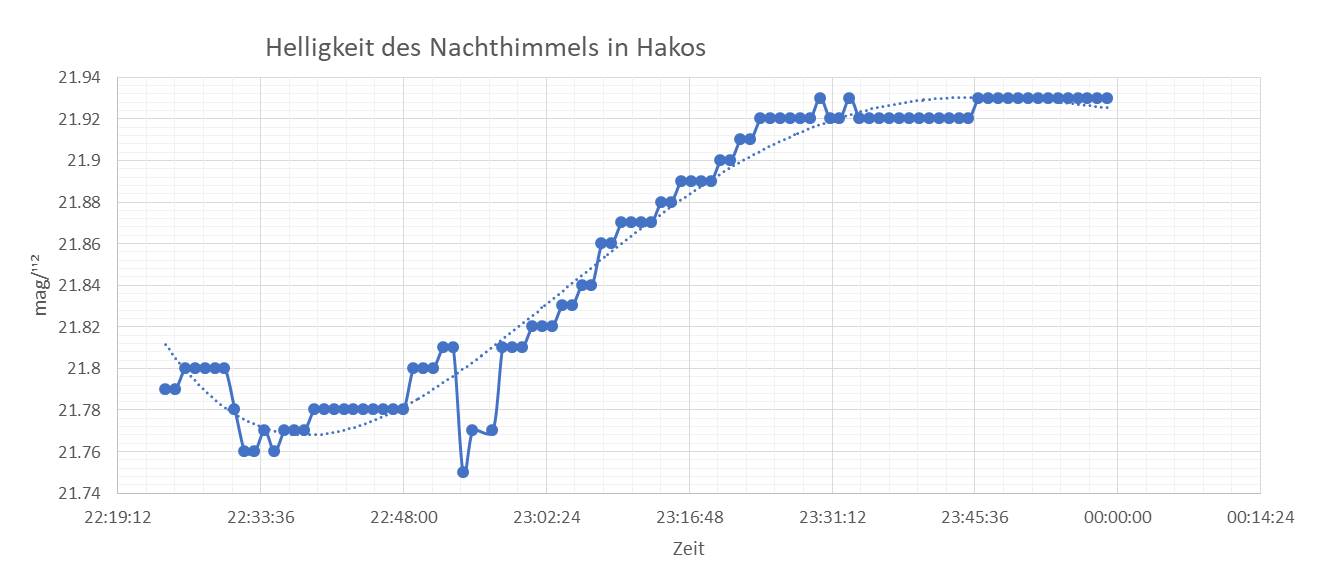
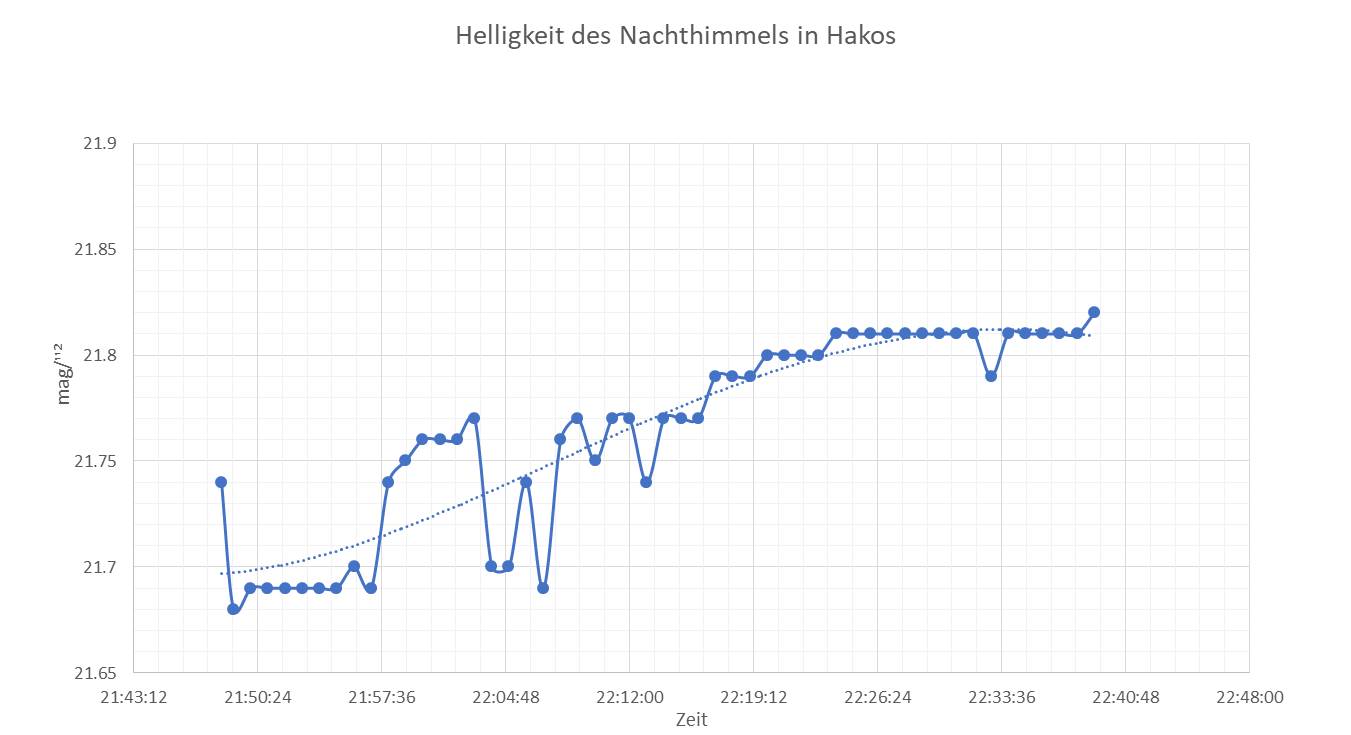
During his stay in 2018 on Hakos IAS member Patrick Ditz made measurements of the sky quality with the Unihedron SQM device.
The following diagrams show with quantitave data the impressive dark skies at the IAS observatory Hakos. Including the visual remarkable phenomenon that it gets darker when the Milky Way sets.
- Details
- Category: Articles
